CLICK HERE TO VIEW OUR MOST RECENT WEBSITE
JEWISH SITES & HISTORY IN PHOENIX AND SCOTTSDALE, ARIZONA
Discover Jewish History in Some of America's Greatest Cities!
Jewish Friendship Trail Guidebooks, as of 2020, only are available directly from the author/publisher. To purchase a Jewish Friendship Trail Guidebook, Email: BostonWalks
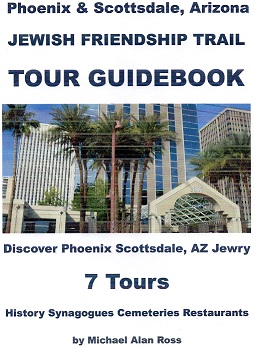
NOW AVAILABLE - (1) Phoenix Scottsdale Jewish Friendship Trail GuideBook
with 7 Tours of Sites of Phoenix Scottsdale Jewry!
Was $19.95 USD Now $8.00 USD + $3 Media Mail
Order your copy now directly from publisher.
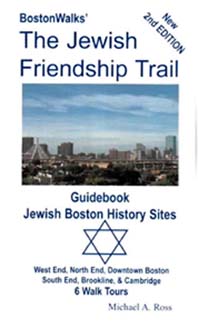
(2) BostonWalks Jewish Friendship Trail GuideBook
with 6 Tours of Sites of Boston, Brookline, and Cambridge Jewry!
Was $19.95 USD Now $8.00 USD + $3 Media Mail
Order your copy now directly from publisher.
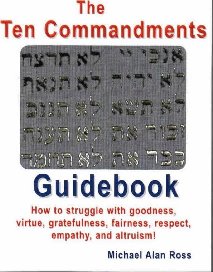
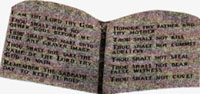
(3) BostonWalks The Ten Commandments GuideBook
with creative suggestions for approaching our Ten Commandments!
Was $19.95 USD Now $8.00 USD + $3 Media Mail
Order your reduced price copy now directly from publisher.
Email: BostonWalks

 Click Here to View the Table of Contents of Boston Walks The Jewish Friendship Trail |
| CLICK HERE TO ORDER NOW |
| CLICK HERE TO ORDER NOW |
Brooklyn Chai Live
Do you know how many Americans die yearly in car crashes?...
 ...How many?
BostonWalksIntegrating the urban, modern ethnic experience with its historical sites and ethical themes in urban locales such as Boston, MA, Portland, ME, East Bay and Providence, RI, and the Upper West Side of Manhattan, NYC. |
Sing Sense to America
|
Celebrating 361 Years
|
Now available!
The Jewish Friendship
Trail Guidebook 6 Self-Guided Walking/Bicycling Jewish Boston History Tours
Covers Boston, Brookline, and Cambridge Softcover 198 pages with maps & b/w photos Click here |
Now available!
The Ten Commandments Guidebook
Ways to Self-Struggle with Classic Morals
In Song, Poetry, and Prose
Covers 10 Commandments Plus One Other!
Softcover 153 pages with practical suggestions pages! Click here |
Boston Walks presents
"The Jewish Friendship Trail"
A Walking Tour Trail to Sites of
Jewish Experience
In Boston's
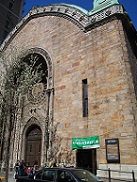
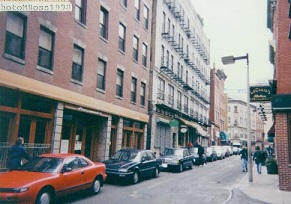
South End
Circa 1850s to 1920s
Copyright Michael Alan Ross, 1997-2015.
All rights reserved.
Email:
Boston Walks The Jewish Friendship Trail
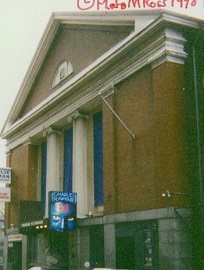
The Jews' arrival in mid-nineteenth century Boston was announced
in the early 1850s when a minyan (prayer-group) constructed Temple
Ohabei
Shalom on Warren (now Warrenton) Street. For the next seventy-five
years,
the Jews would maintain a presence in first the lower and then
the upper South End. During the first fifty of those seventy-five
years,
the South End's small Jewish community, principally, consisted of
approximately 3,000 Central European "Reform" Jewish-Americans, many of
whom had early financial success in commerce. By the 1900s, that
small group was joined in the South End by larger numbers of Eastern
European "Traditional" Jewish-Americans, many of whom had yet to climb
the ladder of financial success. While most of the extant Jewish sites
in the South End reflect upon that earlier group's passage, several
of the later group's members have left memoirs about their lives
in the South End. This BostonWalks' "The Jewish Friendship Trail"
in Boston's South End is designed as a 2 hour walking tour.
Purchase our guidebook, BostonWalks The Jewish Friendship Trail Guidebook, and you'll be able to discover some of these sites on your own!
For now, let's vicariously walk, then, to these sites of Jewish Experience in
Boston's South End circa 1850s to 1920s:
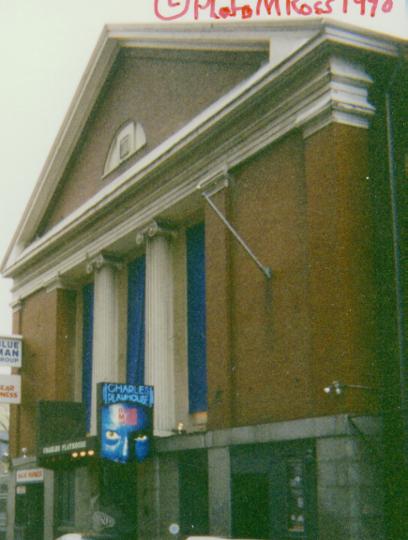
|
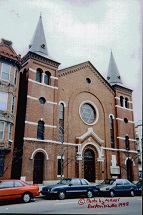
For ideas for additional Jewish and other ethnic walking tours of Boston,
click on the following websites:
-
Walking Tour of West & North Ends (Boston) Jewish sites at
https://bostonwalks.tripod.com/jftwestnorthends.html
-
Bicycling Tour of Cambridge Jewish sites at
https://bostonwalks.tripod.com/Cambridge.html
-
Walking Tour of Brookline Jewish sites at
https://bostonwalks.tripod.com/Brookline.html
-
Discovery of Ethnics and Ethics at
https://bostonwalks.tripod.com/index.html
To learn more about BostonWalks Publishers title,
|
Now available!
The Jewish Friendship Trail Guidebook 6 Self-Guided
Walking/Bicycling Jewish Boston History Tours Covers Boston,
Brookline, and Cambridge Softcover 198 pages with maps & b/w
photos Click here |
Now available!
The Ten Commandments Guidebook Ways to Self-Struggle with
Classic Morals In Song, Poetry, and Prose
Covers 10 Commandments Plus One Other! Softcover 153 pages with
practical suggestions pages! Click here |
Copyright ©
Michael Alan Ross,
2009-2015. All Rights Reserved.
Email: BostonWalks
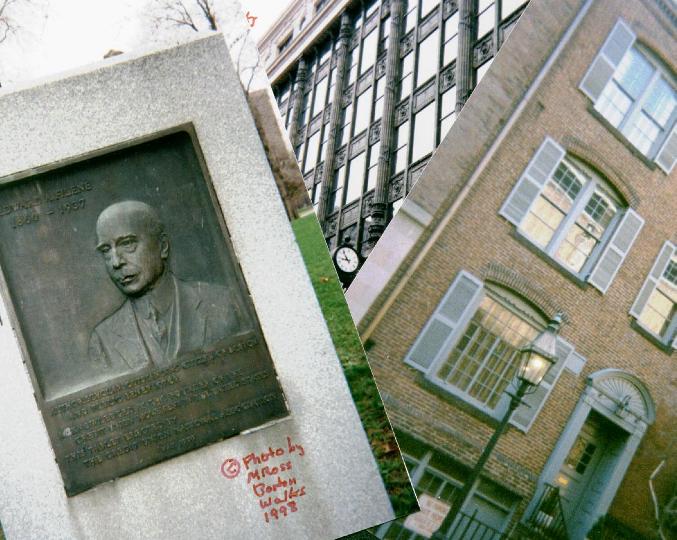
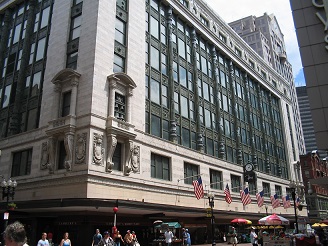
Click on our Filene photo-collage to connect to Boston's Jewish heritage!
Boston Walks
|
Chazak Ve-ematz |
Click here for 10 reasons for more bike trails!
Isn't it time to Attract Middle Class Families Back into Our Cities?
Here's 10 Ways to bring middle-class families back into cities like NYC:
10 Ways to Bring Middle Class Families Back into New York City, Boston, Baltimore, Philadelphia, Washington, DC, Atlanta, and other Citiesconsidering the best of the suburban paradigm for our large cities. |
Are you curious about what are some of the ethical reasons for single-payer universal health care insurance?10 Moral Reasons for One Payer Universal Health Care Insurance for Americain light of Hillel's If I'm only for myself, what am I? |
|
by Michael Alan Ross |
|
We know that there are other belly laughs our there.
|
|
Sing Sense to America
|


Question: What's a political mensch, part one?
|
BostonWalksIntegrating the urban, modern Jewish American city experience with its historical sites and themes in such locales as Boston, MA, Portland, ME, East Bay and Providence, RI, and the Upper West Side of Manhattan, NYC.
|
 FileneBest of BostonNYC UWSBrandeis Love Your NeighborWatertown, New Town, & Muddy RiverWalk Near WaterRefute HateWalk West/North Ends
We're OnePray HereMeditationClubsBrooklineSensual WalksMore LoveReportingJewish BooksTENSouth End
What's a political mensch?
More "What's a political mensch?"




















Capitalist Commands
|